

Skip to content
View in the app

A better way to browse. Learn more.

Demonland

A full-screen app on your home screen with push notifications, badges and more.

To install this app on iOS and iPadOS
  1. Tap the Share icon in Safari
  2. Scroll the menu and tap Add to Home Screen.
  3. Tap Add in the top-right corner.
To install this app on Android
  1. Tap the 3-dot menu (⋮) in the top-right corner of the browser.
  2. Tap Add to Home screen or Install app.
  3. Confirm by tapping Install.

THE STATS FILES PODCAST: Rd 01 vs St. Kilda

Featured Replies

As part of the effort to trim the runtime of the regular podcast, we’ve been looking at which segments could be reshaped without losing what makes them valuable. One segment that naturally came into focus was Binman’s Stats Files. Not because it isn’t important; quite the opposite. It’s become such a substantial and much-loved part of the show that it deserves a little room to breathe.

The Stats Files is one of the things that gives this podcast its unique flavour, but it also takes up a fair bit of airtime and, just as importantly, a lot of preparation from Binman behind the scenes especially with the tight turnaround after those Sunday late-afternoon games.

So rather than lose it altogether, we’re evolving the format.

We’ll still bring you an abridged version of The Stats Files on the main podcast, but for those of you who really like to sink your teeth into the numbers, we’re launching this midweek companion pod featuring the full-length version.

So for fans of The Stats Files, don’t worry it isn’t going anywhere. It’s just getting its own stage.

And this podcast is its debut.

Presenting the inaugural Stats Files presented by Binman for Round 1.

  • Demonland changed the title to THE STATS FILES PODCAST: Rd 01 vs St. Kilda
 

great listen thanks @binman

i would think one of the reasons salem's ratings are lower than the likes of lindsay playing in a similar-ish role as a half back rebounder is that he takes the more 'risky' kicks that are more likely to result in turnover etc.

would that be a correct interpretation of how it is judged by the ratings system?

Thanks @Demonland , @binman and @WheeloRatings . The new format (two pods) works extremely well for me! I thought the way Bin linked the stats to our on field strengths and weaknesses, and even some comparisons to 2025 was fantastic. Painted a great picture of our evolution as a footy team under Kingy.

 
1 hour ago, whatwhat say what said:

great listen thanks @binman

i would think one of the reasons salem's ratings are lower than the likes of lindsay playing in a similar-ish role as a half back rebounder is that he takes the more 'risky' kicks that are more likely to result in turnover etc.

would that be a correct interpretation of how it is judged by the ratings system?

That's possible - particularly if those turnovers result in oppo goals.

The way the CD player rating is calculated is each involvement a player has (eg kick, handball, pressure act, mark, free kick for and against etc etc) is scored on a system called Next Expected Score, which in simple terms is how that involvement impacts the probability your team scores, or in the case of an error the opponent scores - i think I'm right in saying that each involvement is scored on a scale of negative six to positive six depending on the NES value (@WheeloRatings is that right?).

So yes, if Salo took on more high risks on Sunday, and in doing so turned the ball over resulting in a Saints goal he would get wacked for that points wise (eg a clanger goes to an opponent who directly kicks a goal, such as the kick Salo had intercepted inside our 50, Salo would lose 6 points, if the turnover resulted in in a goal but only after say a chain of 3 disposals he might lose 3 points).

Conversely though if Salo's high risk kick are part of a scoring chain (which is why such kicks are so valuable when they come off) Salo earns points. If one of those kicks is a goal assist, he scores good points (maybe 6, but 6 might be only for actual goal scorers, im not sure -it's all a bit mysterious).

All that said, XL actually had more turnovers (6) than Salo who had 4. But Salo had 6 clangers, one of which did directly result in a goal, two more than HL. So, he lost points to XL there.

They both had 4 score involvements and 1 goal assist so close to equal points on that front.

A criticism of the CD player rating system is because it focuses on scoreboard impact of each involvement it over indexes goals, goal assists and score involvements and therefore defenders and role players often don't score as well as forwards or mids.

That means defenders often rate lower than you think they otherwise might. Which makes XLs 13.4 player rating even more meritorious.

Edited by binman

Liked the new pod - and as @Deeoldfart mentioned, the way the stats are linked to what we've seen was valuable.

I felt the stand alone pod probably was easier to digest than having the stats deep-dive competing with time / focus of the 'main' podcast. Looking forward to future episodes unpacking the reasons we won! (Not looking forward to an episode that says, basically; "according to all the metrics, we should have lost by a lot more!")


3 hours ago, adonski said:

Only 43 mins?

Well I did aim for 20 (but might make it 30) and was padded out by Andy's intro and that song after - which will never be heard again

 
9 hours ago, binman said:

That's possible - particularly if those turnovers result in oppo goals.

The way the CD player rating is calculated is each involvement a player has (eg kick, handball, pressure act, mark, free kick for and against etc etc) is scored on a system called Next Expected Score, which in simple terms is how that involvement impacts the probability your team scores, or in the case of an error the opponent scores - i think I'm right in saying that each involvement is scored on a scale of negative six to positive six depending on the NES value (@WheeloRatings is that right?).

So yes, if Salo took on more high risks on Sunday, and in doing so turned the ball over resulting in a Saints goal he would get wacked for that points wise (eg a clanger goes to an opponent who directly kicks a goal, such as the kick Salo had intercepted inside our 50, Salo would lose 6 points, if the turnover resulted in in a goal but only after say a chain of 3 disposals he might lose 3 points).

Conversely though if Salo's high risk kick are part of a scoring chain (which is why such kicks are so valuable when they come off) Salo earns points. If one of those kicks is a goal assist, he scores good points (maybe 6, but 6 might be only for actual goal scorers, im not sure -it's all a bit mysterious).

All that said, XL actually had more turnovers (6) than Salo who had 4. But Salo had 6 clangers, one of which did directly result in a goal, two more than HL. So, he lost points to XL there.

They both had 4 score involvements and 1 goal assist so close to equal points on that front.

A criticism of the CD player rating system is because it focuses on scoreboard impact of each involvement it over indexes goals, goal assists and score involvements and therefore defenders and role players often don't score as well as forwards or mids.

That means defenders often rate lower than you think they otherwise might. Which makes XLs 13.4 player rating even more meritorious.

The underlying model estimates the likelihood of each team scoring next based on (1) the location on the ground, and (2) the game state (i.e. set position, uncontested, hard ball, loose ball).

An equity value is calculated based on the likelihood of each team scoring next, which will range between -6 (opponent is guaranteed to score a goal) and +6 (team is guaranteed to score a goal).

When the ball is in a contested state (for example, a stoppage, prior to winning a contested possession, or there's a marking contest), equity values are calculated from each team's perspective if they were to win next possession, and then these are averaged. At a centre bounce, each team is as likely to score next as each other, so the equity is 0.

A player's equity (or player rating) is calculated from the change in equity as a result of their involvement. An individual involvement will rarely be close to +6 or -6 - it's typically only a fraction of that. As an example, consider a goal from a centre bounce where the opposition had no involvement in the chain. The team's equity started at 0 and ended at +6 (i.e. they scored a goal), so the total change in equity was 6 points. Those 6 points are shared among all players involved in the play.

Here is the breakdown of equity for the final goal in the third quarter of the 2021 GF, based on my model:

Player

Stat

Equity

Tim English

Hitout

+0.00

Jack Viney

Ground Kick

+1.76

Luke Jackson

Gather

+0.00

Luke Jackson

Run

+0.09

Luke Jackson

Handball

+0.30

Clayton Oliver

Handball Received

+0.00

Clayton Oliver

Run

+0.29

Clayton Oliver

Kick

+3.56

Total

+6.00

Players gain/lose equity from taking possession of the ball, running with the ball, disposals, hitouts, spoils, smothers, applying pressure including tackles, giving away free kicks, dropping uncontested marks. There are also various instances where the change in equity is shared between two players. For example, the equity change from a hitout to advantage is shared between the ruck and player gaining possession; the equity change from a mark on lead is shared between the player kicking the ball and the player taking the mark.

Chapters 5-8 in this thesis goes into detail on field equity and the player ratings methodology:

https://figshare.swinburne.edu.au/articles/thesis/Assessing_player_performance_in_Australian_football_using_spatial_data/26294677?file=47661457

The data set I use for equity calculation is missing pressure, smothers, and hitouts sharked (I use hitouts to opposition as a proxy), so there are some differences in my model due to availability of data.

The following table shows the average equity gained/lost per involvement in my model (for most involvement types) as a guide, but it can vary a lot for a given type of involvement:

Category

Total

D50

Def.
Mid

Att.
Mid

F50

Disposal

Goal

2.39

Ground Kick - Effective

1.26

1.32

1.25

1.27

1.19

Kick - Effective

0.30

0.15

0.22

0.49

1.19

Ground Kick - Ineffective

0.27

0.35

0.27

0.33

0.05

Handball - Effective

0.21

0.20

0.21

0.19

0.27

Ground Kick - Clanger

-0.09

-0.10

-0.04

-0.06

-0.26

Kick - Ineffective

-0.29

-0.36

-0.33

-0.24

-0.25

Handball - Ineffective

-0.70

-0.62

-0.72

-0.70

-0.74

Handball - Clanger

-0.71

-0.67

-0.73

-0.71

-0.72

Kick - Clanger

-0.84

-0.74

-0.71

-0.82

-1.37

Behind

-1.68

Contested Possession

Contested Mark

1.58

1.94

1.24

1.24

2.03

Contested Knock On

1.06

1.11

1.07

1.02

1.07

Free For

0.74

0.82

0.64

0.67

1.01

Loose Ball Get

0.73

0.75

0.71

0.72

0.76

Hard Ball Get

0.50

0.53

0.47

0.49

0.53

Ruck Hard Ball Get

0.44

0.37

0.45

0.48

0.40

Gather From Hitout

0.23

0.20

0.23

0.26

0.19

Uncontested Possession

Knock On

1.07

1.01

1.06

1.07

1.13

Uncontested Intercept Mark

0.80

0.84

0.73

0.77

1.21

Gather from Opposition

0.63

0.64

0.62

0.63

0.70

Mark On Lead

0.48

0.21

0.32

0.40

0.72

Gather

0.00

0.00

0.00

0.00

0.00

Handball Received

0.00

0.00

0.00

0.00

0.00

Uncontested Mark

0.00

0.00

0.00

0.00

0.00

Hitout

Hitout To Advantage

0.46

0.41

0.43

0.50

0.37

Hitout

0.00

0.00

0.00

0.00

0.00

Hitout To Opposition

-0.19

-0.14

-0.17

-0.21

-0.17

Spoil

Spoil

0.35

0.65

0.19

0.16

-0.20

Debits

Free Against

-0.68

-0.76

-0.58

-0.61

-0.98

No Pressure Error

-1.03

-0.93

-1.04

-0.99

-1.16

Mark Dropped

-1.21

-0.78

-0.94

-1.00

-2.02

15 minutes ago, WheeloRatings said:

The underlying model estimates the likelihood of each team scoring next based on (1) the location on the ground, and (2) the game state (i.e. set position, uncontested, hard ball, loose ball).

An equity value is calculated based on the likelihood of each team scoring next, which will range between -6 (opponent is guaranteed to score a goal) and +6 (team is guaranteed to score a goal).

When the ball is in a contested state (for example, a stoppage, prior to winning a contested possession, or there's a marking contest), equity values are calculated from each team's perspective if they were to win next possession, and then these are averaged. At a centre bounce, each team is as likely to score next as each other, so the equity is 0.

A player's equity (or player rating) is calculated from the change in equity as a result of their involvement. An individual involvement will rarely be close to +6 or -6 - it's typically only a fraction of that. As an example, consider a goal from a centre bounce where the opposition had no involvement in the chain. The team's equity started at 0 and ended at +6 (i.e. they scored a goal), so the total change in equity was 6 points. Those 6 points are shared among all players involved in the play.

Here is the breakdown of equity for the final goal in the third quarter of the 2021 GF, based on my model:

Player

Stat

Equity

Tim English

Hitout

+0.00

Jack Viney

Ground Kick

+1.76

Luke Jackson

Gather

+0.00

Luke Jackson

Run

+0.09

Luke Jackson

Handball

+0.30

Clayton Oliver

Handball Received

+0.00

Clayton Oliver

Run

+0.29

Clayton Oliver

Kick

+3.56

Total

+6.00

Players gain/lose equity from taking possession of the ball, running with the ball, disposals, hitouts, spoils, smothers, applying pressure including tackles, giving away free kicks, dropping uncontested marks. There are also various instances where the change in equity is shared between two players. For example, the equity change from a hitout to advantage is shared between the ruck and player gaining possession; the equity change from a mark on lead is shared between the player kicking the ball and the player taking the mark.

Chapters 5-8 in this thesis goes into detail on field equity and the player ratings methodology:

https://figshare.swinburne.edu.au/articles/thesis/Assessing_player_performance_in_Australian_football_using_spatial_data/26294677?file=47661457

The data set I use for equity calculation is missing pressure, smothers, and hitouts sharked (I use hitouts to opposition as a proxy), so there are some differences in my model due to availability of data.

The following table shows the average equity gained/lost per involvement in my model (for most involvement types) as a guide, but it can vary a lot for a given type of involvement:

Category

Total

D50

Def.
Mid

Att.
Mid

F50

Disposal

Goal

2.39

Ground Kick - Effective

1.26

1.32

1.25

1.27

1.19

Kick - Effective

0.30

0.15

0.22

0.49

1.19

Ground Kick - Ineffective

0.27

0.35

0.27

0.33

0.05

Handball - Effective

0.21

0.20

0.21

0.19

0.27

Ground Kick - Clanger

-0.09

-0.10

-0.04

-0.06

-0.26

Kick - Ineffective

-0.29

-0.36

-0.33

-0.24

-0.25

Handball - Ineffective

-0.70

-0.62

-0.72

-0.70

-0.74

Handball - Clanger

-0.71

-0.67

-0.73

-0.71

-0.72

Kick - Clanger

-0.84

-0.74

-0.71

-0.82

-1.37

Behind

-1.68

Contested Possession

Contested Mark

1.58

1.94

1.24

1.24

2.03

Contested Knock On

1.06

1.11

1.07

1.02

1.07

Free For

0.74

0.82

0.64

0.67

1.01

Loose Ball Get

0.73

0.75

0.71

0.72

0.76

Hard Ball Get

0.50

0.53

0.47

0.49

0.53

Ruck Hard Ball Get

0.44

0.37

0.45

0.48

0.40

Gather From Hitout

0.23

0.20

0.23

0.26

0.19

Uncontested Possession

Knock On

1.07

1.01

1.06

1.07

1.13

Uncontested Intercept Mark

0.80

0.84

0.73

0.77

1.21

Gather from Opposition

0.63

0.64

0.62

0.63

0.70

Mark On Lead

0.48

0.21

0.32

0.40

0.72

Gather

0.00

0.00

0.00

0.00

0.00

Handball Received

0.00

0.00

0.00

0.00

0.00

Uncontested Mark

0.00

0.00

0.00

0.00

0.00

Hitout

Hitout To Advantage

0.46

0.41

0.43

0.50

0.37

Hitout

0.00

0.00

0.00

0.00

0.00

Hitout To Opposition

-0.19

-0.14

-0.17

-0.21

-0.17

Spoil

Spoil

0.35

0.65

0.19

0.16

-0.20

Debits

Free Against

-0.68

-0.76

-0.58

-0.61

-0.98

No Pressure Error

-1.03

-0.93

-1.04

-0.99

-1.16

Mark Dropped

-1.21

-0.78

-0.94

-1.00

-2.02

Thanks wheelo, that's a brilliant explanation of the ratings sytem.

In your scenario of a goal from a centre bounce where the opposition has no involvement in the chain, the the team scores six points, shared between players involved.

How many equity points would a player receive, say Maxy, who took the ball from the ball up, ran forward and goaled without any involvement from a teamate (eg no shepherd)?


6 minutes ago, binman said:

Thanks wheelo, that's a brilliant explanation of the ratings sytem.

In your scenario of a goal from a centre bounce where the opposition has no involvement in the chain, the the team scores six points, shared between players involved.

How many equity points would a player receive, say Maxy, who took the ball from the ball up, ran forward and goaled without any involvement from a teamate (eg no shepherd)?

He would get 6 points in that scenario.

7 minutes ago, WheeloRatings said:

He would get 6 points in that scenario.

And if he Maxy tapped it Koz who goaled without the involvement of a teammate he and Maxy would each get 3 points?

Edited by binman

8 hours ago, binman said:

And if he Maxy tapped it Koz who goaled without the involvement of a teammate he and Maxy would each get 3 points?

If that was a hitout to advantage at a centre bounce (ball up), Max would only get about 0.6 points, Koz 5.4. The ruck gets two thirds of the change in equity from a hitout to advantage, and the player winning possession gets one third. BUT, the change in equity is only around 0.9 points because the likelihood of actually scoring a goal from that position in the centre of the ground is still low. If Koz kicks a goal with no other player involved, he would get around 5.1 points from his run and shot (the change in equity from 0.9 to 6.0) plus the 0.3 he got from the gather from the hitout.

The example of a goal from a centre clearance is a simple example, but the equity value is constantly changing with every possession/disposal regardless of whether there is a score. Every shift in the equity is credited (or debited) to a player (or two).

30 minutes ago, WheeloRatings said:

If that was a hitout to advantage at a centre bounce (ball up), Max would only get about 0.6 points, Koz 5.4. The ruck gets two thirds of the change in equity from a hitout to advantage, and the player winning possession gets one third. BUT, the change in equity is only around 0.9 points because the likelihood of actually scoring a goal from that position in the centre of the ground is still low. If Koz kicks a goal with no other player involved, he would get around 5.1 points from his run and shot (the change in equity from 0.9 to 6.0) plus the 0.3 he got from the gather from the hitout.

The example of a goal from a centre clearance is a simple example, but the equity value is constantly changing with every possession/disposal regardless of whether there is a score. Every shift in the equity is credited (or debited) to a player (or two).

To determine the equity points for ball winning at the all team level you aggregate each of that team's players equity points for actions that result in winning the ball.

How do you source the individual ball winning equity points - is that data extracted from the CD data?

On 20/03/2026 at 07:53, binman said:

To determine the equity points for ball winning at the all team level you aggregate each of that team's players equity points for actions that result in winning the ball.

How do you source the individual ball winning equity points - is that data extracted from the CD data?

CD does not make available the equity breakdown. There are two event-based datasets with timestamps and locations of all possessions, disposals and several other events in each game. I have my own equity model that is based on the CD approach which I apply from first principles to calculate player equity points. It will not be the same as the CD model for multiple reasons. (1) I don't have access to all the data the goes into the CD model. (2) I have based my underlying equity model on 2021-2025 data but CD is based on pre ~2012 data and it is no doubt a slightly different approach to calculating equity.


1 hour ago, WheeloRatings said:

CD does not make available the equity breakdown. There are two event-based datasets with timestamps and locations of all possessions, disposals and several other events in each game. I have my own equity model that is based on the CD approach which I apply from first principles to calculate player equity points. It will not be the same as the CD model for multiple reasons. (1) I don't have access to all the data the goes into the CD model. (2) I have based my underlying equity model on 2021-2025 data but CD is based on pre ~2012 data and it is no doubt a slightly different approach to calculating equity.

Thanks wheelo.

Apologies for all the questions, reall5 appreciate your responses.

Another curious question - am I right in thinking you chose ball use and ball winning because they are critical determinants in winning games and they are a better, more nuanced measure than disposal efficiency (which is a pretty useless measure) and contested possessions?

Thanks @WheeloRatings

The player ratings are probably the best stat going around. But I’m just trying to understand if the context of possessions is taken into account. For example, if a player takes a kick from the defensive 50 and the ball is marked on the offensive edge of the centre square by a teammate, does the context matter? For example, if one kick is centimetre perfect to a teammate who runs into an open goal and the other is down the line to a pack contested mark, are the kickers scores identical or different?

Thanks @WheeloRatings

51 minutes ago, Watson11 said:

The player ratings are probably the best stat going around. But I’m just trying to understand if the context of possessions is taken into account. For example, if a player takes a kick from the defensive 50 and the ball is marked on the offensive edge of the centre square by a teammate, does the context matter? For example, if one kick is centimetre perfect to a teammate who runs into an open goal and the other is down the line to a pack contested mark, are the kickers scores identical or different?

I'll let wheelo give the proper answer, but if I understand a previous post od his about about equity points, the answer to your question is different.

The reason being is, if I understand it correctly, the probability of scoring from a given position (because of pressure, spot on the ground etc) is factored into the equity points allocated for each involvement (and in your example, each involvement in a successful scoring chain).

Edited by binman

4 hours ago, binman said:

Thanks wheelo.

Apologies for all the questions, reall5 appreciate your responses.

Another curious question - am I right in thinking you chose ball use and ball winning because they are critical determinants in winning games and they are a better, more nuanced measure than disposal efficiency (which is a pretty useless measure) and contested possessions?

My primary motivation for adding ball winning and ball use to the website, and subsequently here, was actually because Daniel Hoyne has spoken about a lot about them on his Full On Footy Analysis segment on SEN. They are also the two major contributors to the player rating and they help to better understand why a player was rated a certain way.

I would agree that, generally speaking, they are better and more nuanced measures than disposal efficiency and possession counts. They don't reward uncontested possessions and chipping the ball around the backline. Ball use equity generally penalises or rewards behinds and goals a lot more than other kicks around the ground, which makes sense from a team score perspective, but may not truly reflect how good a player's ball use was given there is luck associated with goalkicking.


1 hour ago, Watson11 said:

Thanks @WheeloRatings

The player ratings are probably the best stat going around. But I’m just trying to understand if the context of possessions is taken into account. For example, if a player takes a kick from the defensive 50 and the ball is marked on the offensive edge of the centre square by a teammate, does the context matter? For example, if one kick is centimetre perfect to a teammate who runs into an open goal and the other is down the line to a pack contested mark, are the kickers scores identical or different?

6 minutes ago, binman said:

Thanks @WheeloRatings

I'll let wheelo give the proper answer, but if I understand a previous post od his about about equity points, the answer to your question is different.

The reason being is, if I understand it correctly, the probability of scoring from a given position (because of pressure, spot on the ground etc) is factored into the equity points allocated for each involvement (and in your example, each involvement in a successful scoring chain).

Context does matter, and the equity for the two kickers in your example would be different. What the player who was the target of the kick did does not matter; how they receive the ball does.

The equity change for a kick takes the following into account:

  • Location of the kick;

  • Inferred pressure on the kicker (e.g. set position following free/mark, hard ball get, handball receive, etc.) - note, CD's player ratings accounts for actual pressure on the kick itself, so physical, chasing, etc;

  • Location of the kick result;

  • Game state at the kick result (e.g. ground-level contest, marking contest, uncontested possession).

The last point is important and would likely differentiate the two players in your example.

Contested state

If a player kicks to a contest (either there's a marking contest or ground-level contest, which includes any contested possession, spoil or stoppage), then it was assumed to be a 50/50 ball - each team is equally likely to win possession. The kicker's equity gained/lost is independent of the outcome of that contest. If the teammate takes a contested mark or wins a contested ball, they are credited with the change in equity from the 50/50 game state to having possession.

Uncontested state

If a player kicks to an uncontested possession (uncontested mark or gather, but not marks on lead), the kicker is credited with the change in equity from the kick to their teammate having possession and the player receiving the ball does not get any points for the uncontested possession.

Mark on lead

If a player kicks to a mark on the lead, both players are credited with half the change in equity from the kick to their teammate having possession.

In your example, a kick being "centimetre perfect" doesn't matter. You could kick it nowhere near your intended target, but it could result in an uncontested mark and you'd be credited with the change in equity. Or it could be a centimetre perfect kick to a contest but to your teammate's advantage and it would still be considered a 50/50 ball, and the teammate would be credited with the ball winning equity.

Join the conversation

You can post now and register later. If you have an account, sign in now to post with your account.

Guest
Unfortunately, your content contains terms that we do not allow. Please edit your content to remove the highlighted words below.
Reply to this topic...

Featured Content

  • CASEY: Footscray

    The Casey Demons faced a tough first up task taking on reigning VFL premiers Footscray at Mission Whitten Oval. The Bulldogs, who unfurled their premiership flag pre-game, had 15 AFL-listed players and their top VFL talent available, setting them up for their 15th consecutive win.

      • Thanks
    • 3 replies
  • POSTGAME: Fremantle

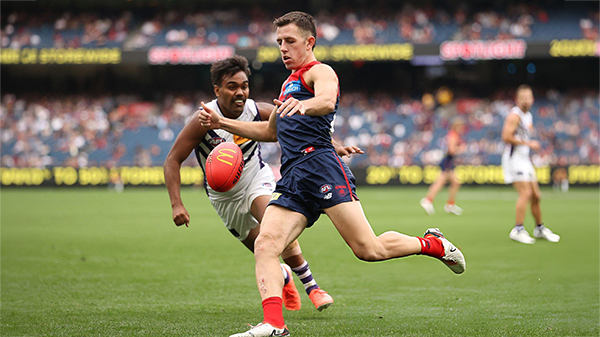
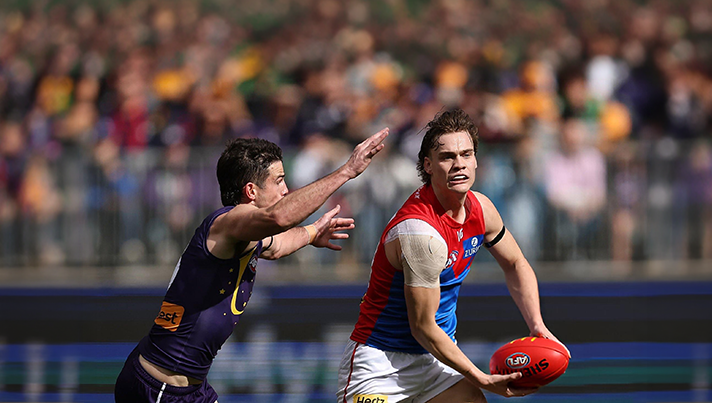
    The Demons were fumbly, inefficient, outrun and outgunned all over the field as they went down to the Dockers by 48 points at Optus Stadium in Perth.

      • Sad
      • Thanks
      • Like
    • 248 replies
  • PODCAST: Fremantle

    The Demonland Podcast will air LIVE on Monday, 23rd March @ 8:00pm. Join Binman, George & I as we dissect the Dees dismal loss to the Dockers in Perth.
    Your questions and comments are a huge part of our podcast so please post anything you want to ask or say below and we'll give you a shout out on the show.
    PLEASE TRY TO KEEP THE QUESTIONS/COMMENTS TO ONE SPECIFIC TOPIC/PLAYER IN ORDER TO MAKE THE PREPARATION FOR THE PODCAST EASIER.

      • Love
      • Thanks
      • Like
    • 18 replies
  • VOTES: Fremantle

    Coming off Back to Back Demonland Player of the Year Award wins Captain Max Gawn is already in the lead followed by Jacob van Rooyen, Jai Culley, Kozzy Pickett & Jack Steele. Your votes please. 6, 5, 4, 3, 2 & 1.

      • Like
    • 43 replies
  • GAMEDAY: Fremantle

    It’s Game Day and the Demons have made the long trip west to take on Fremantle tonight at Optus Stadium. Can Melbourne make it two from two to start the season, and what are you hoping to see from the Dees under the lights in Perth?

      • Like
    • 547 replies
  • PREVIEW: Fremantle

    The dominant storyline coming out of Round One for Saturday Night’s clash at Optus Stadium centres on the influence of the big men. The spotlight naturally falls on two elite ruckmen who, five years ago, shared the stage in Melbourne’s memorable premiership triumph.

      • Thanks
    • 3 replies

Account

Navigation

Search

Search

Configure browser push notifications

Chrome (Android)
  1. Tap the lock icon next to the address bar.
  2. Tap Permissions → Notifications.
  3. Adjust your preference.
Chrome (Desktop)
  1. Click the padlock icon in the address bar.
  2. Select Site settings.
  3. Find Notifications and adjust your preference.