


Skip to content
View in the app

A better way to browse. Learn more.

Demonland

A full-screen app on your home screen with push notifications, badges and more.

To install this app on iOS and iPadOS
  1. Tap the Share icon in Safari
  2. Scroll the menu and tap Add to Home Screen.
  3. Tap Add in the top-right corner.
To install this app on Android
  1. Tap the 3-dot menu (⋮) in the top-right corner of the browser.
  2. Tap Add to Home screen or Install app.
  3. Confirm by tapping Install.

Paper by Steve Harris on the Economics of the AFL

Featured Replies

Demonland Podcast LIVE @ 9:00PM
 

The sooner we get a proper training and administrative base, and develop the "Team Melbourne" concept (AFL, soccer, netball, basketball) the better. We have no way of competing in a 10-team city against the likes of Collingwood and Essendon (let alone the non-Victorian behemoths with 40,000+ members) unless we think outside the square and achieve efficiencies in other ways e.g. sharing resources with non-competitiors.

Collingwood is an interesting contradiction though ... that you can have all the wealth and resources in the world and still not win a premiership. On the other hand, with all those resources they do seem to get more from a list that is not as good as ours. And Carlton is a good example of what happens if you get too financially big-headed.

Very interesting stuff. I am highly impressed with Steve Harris, and he seems to be doing a great job. This is a well researched and deep article, recommended reading.


Interesting reading..........makes the relocation of more than one Melbourne based team seem pretty much inevitable.

I've been saying the AFL is turning into the EPL for years. In fact we are probably there already. Major work needs to be done to ensure that all 16 clubs have a realistic chance of winning a flag once every 16 years. Currently you could argue that only 4 to 8 clubs have this chance afforded to them and that is very EPL.


It's true. You really can't see a flag coming back to Victoria within the next 2 years imo. They should make it like the NBA/NFL etc, where there is a cap on EVERYTHING. A team like the Milwaukee Bucks, who are probably equivilant to Melbourne (low number of season ticket holders, low revenue, lower worth) as compared to other teams, but they have just as much chance of winning the NBA Championship in the next 15 or years than say the LA Laker or Chicago Bulls do, who are equivilant to say the Eagles or Crows or Magpies, because there is the eveness in terms of money spent on developement and coaches. Teams like Collingwood/WC etc. can afford the best in the business in everything, while we can only afford the best for a few areas, and the average for other.

I see no short term change for much of the Vic teams. I do have a gut inkling that we , strangely enough may emerge as a strength after we make camp in the new tent.. That and the brand development curretntly underway my the MFC. No immediate results but over say the next 5-10 years as the Identity of "MELBOURNE" becomes stronger...partly througth the team M concept then a comparitive betterment of the Demons I feel will emerge. again nothing really to pin that on...just my thoughts.

p.s what happens to Phoenix's participitation now ?

p.s what happens to Phoenix's participitation now ?

The partnership was\is with Netball Victoria, not the Phoenix as such. I would assume that is still in place and the new victorian netball team will be involved?

 
I see no short term change for much of the Vic teams. I do have a gut inkling that we , strangely enough may emerge as a strength after we make camp in the new tent.. That and the brand development curretntly underway my the MFC. No immediate results but over say the next 5-10 years as the Identity of "MELBOURNE" becomes stronger...partly througth the team M concept then a comparitive betterment of the Demons I feel will emerge. again nothing really to pin that on...just my thoughts.

p.s what happens to Phoenix's participitation now ?

Like it Belz. The team M concept if done right can be a massive boost for all involved. the word melbourne is the most marketable brand available to all those teams and should become the envy of every other team in all the codes involved in the partnership.

For those that might get turned off by the article I thought these excerpts were worth reading:

The average cost to run a football club now is around $15 million. It is an interesting historic sidenote that, when the Melbourne-Hawthorn merger was put on the table just a decade ago, the underlying reason for the then Melbourne board to vote for the merger was that the cost of running a football team was predicted to get to $15 million a year. That was concluded to simply not be affordable.
As the AFL has noted in a discussion paper, “The higher expenditure for non-Victorian clubs directly represents a greater ability to invest in the team, coaching, administration and marketing of the club." It is noteworthy that this comment was in fact made in a discussion paper eight years ago.

There is an imbalance in the player development capacity for Victorian clubs, in that the current second-tier setup - which is also under review - has competing agendas for the AFL and VFL clubs, and is a competitive imbalance and not sustainable. It is easier for the West Coast Eagles, and the Crows, for example, to have more players on a genuine and structured development path, which means that replacement players are better positioned to move into senior positions.
The percentage of the population supporting an AFL team is, in fact, lower in Melbourne (37%) than the national average (52%) - and lower than other cities - Perth 72%, Adelaide 53%, Brisbane 47%, Sydney 43%. These may be percentages of a lower population, but when the population of South East Queensland and Perth, in particular, will easily outstrip Melbourne for the next 20 years, there is an inbuilt growth advantage.

When the AFL cannot have a 100% neutral fixture – which means that either each team plays each other either once or twice per season - any inbuilt advantages for any team are magnified, and cannot be adequately offset by fixture juggling over more than a single season.

While none of the article was ground-breaking I definitely thought it was worth reading.


Most people mention Money doesn't equal success by bringing up Collingwood, we forget that they are the last Vic club to play in a grand final two in a row and almost won 2002.

I have a question regarding the revenue received on match day- I read somewhere that due to Melbourne's poor attendences in recent weeks they have been operating at a loss, somewhere in the vicinity of $40,000 per match. This was clearly a catalyst for the promotion ran last week- and again for the Adelaide game- offerring so-called Melbourne "fans" the chance to win $1,000 for attending the match. Desperate times call for desperate measures...

Furthermore, for many years the Melbourne Football Club has not only had to battle poor attendences, but also the MCC, in order to win its own supporters. Recently, some great work by the Club's Administration has led to some respite on this matter. However, whilst the joint MCC-Melbourne FC membership initiative should generally be considered a win for the club, it is only a minor one considering the large proportion of the membership fees are still retained by the MCC.

Whilst I understand the MCC-MFC membership is a whole other issue in its own right, it leads to my question- do the Melbourne Football Club receive any monetary remuneration for an MCC member's attendence on match-day? Does the MCC for that matter receive any revenue through the match-day attendence of its members? Or is any MCC match-day revenue limited to guest passes and what-not, assuming that match-day financial benefits are consumed through the intial purchase of the membership? (i.e. the purchase of an MCC membership is the equivalent of pre-paying for the matches you attend, therefore whether you attend or not is irrelevant in financial terms?)

It's common knowledge that Melbourne, and all clubs for that matter, generate revenue through the sales of club memberships. It's also common knowledge that Melboune gains nothing from the sale of MCC memberships, unless of course that member agrees to pay an additional fee to become an MCC-Melbourne member. What is less common knowledge is how the financial benefits gained from club membership translate to match day financial benefits for the club.

Can anyone shed some light as to how a club makes a profit on match-day? I'm assuming there's some sort of scenario where the home club is required to pay some sort of 'lease' to the ground they are playing at, and in return they receive the gate receipts for the match. (Is this right? If so, what impact does the match-day attendence of a paid-up member have on the gate receipts, considering no money changes hands upon entry?)

There is no doubt that big attendences lead to big dollars. Look at Collingwood. But how exactly do these big attendences lead to these big dollars? Do the small clubs, such as Melbourne, rely on the walk-up Collingwood fans paying at the gate in order to win-out financially on the big Home fixtures? Or does the Melbourne Football Club benefit financially from a large contingent of paid-up members attending?

For example, do the clubs receive additional revenue to that already obtained by selling a membership through the match day attendence of a member? (i.e. Do the clubs receive say, $150 for selling a membership, and then a further $25 (for example) for every match attended by that member?)

Or are the clubs required to subsidise their member's match-day attendence out of the amounts received for the club memberships? If this is the case, then it appears that non-member and opposition supporters would be more appealing to the club on match-day than actual members, as the members attendence will have no positive fianancial impact.

The reason I ask is that I am an AFL member, with Melbourne being my 'club of support'. My family are also Melbourne-AFL members, and have been good enough to buy this membership on my behalf whilst I am at university. However, for the last 3 years I have also decided to take advantage of the Melbourne Concession Membership available as a uni student, paying around $110 out of my own pocket because I love the club. I therefore have two Melbourne memberships, yet I only ever use one.

Herin lies my question: would the Melbourne Football Club benefit financially if I were to enter the ground using my AFL membership, get a pass-out or simply walk straight out, and then re-enter using my Melbourne Concession membership? While I'm at it, my father is unable to attend the Adelaide game due to work commitments; should I repeat this process and also enter on his ticket?

Or will this simply have no effect on the match-day revenue of the club, and merely boost the attendence figure by a measly two non-existent patrons?

Whilst the former scenario would not produce an accurate match-day attendence figure, and some may argue (but I doubt they would considering our recent attendences) that I am denying somebody else the chance to watch the game by taking up a seat or two that I will never use. However, if the club were to gain an extra $50 (per my above example) by my simply taking an extra two minutes to enter and re-enter the ground, surely its worth it? Maybe this week we will only lose $39,950 against Adelaide, but I suppose it's a start...

Thoughts?

I beleive MFC get zilch from an MCC member attending the G

Archived

This topic is now archived and is closed to further replies.

Featured Content

  • PREGAME: Sydney

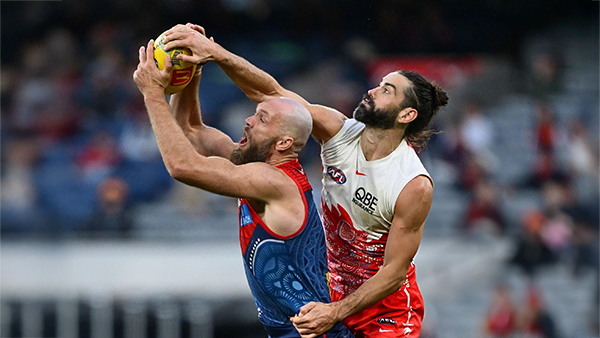
    The Demons are back on the road again for the third time this season when they take on the red hot ladder leaders the Sydney Swans at the SCG. Can the Demons take another big scalp? Who comes in and who goes out? 

      • Love
      • Thanks
      • Like
    • 152 replies
  • CASEY: Richmond

    The winds finally returned to Casey Fields for the Demons’ third home game of the VFL season, and its impact was immediate. After two opening rounds played in uncharacteristically fine conditions, the Anzac Day clash brought back the familiar gusty conditions that have been a feature of the region at this time of the year.
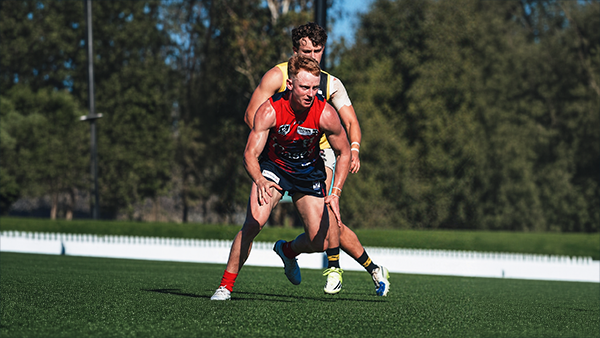
    Forced to kick into the breeze first, the slow-starting Demons faced a tricky opening against an enthusiastic young Tigers outfit. Casey responded by turning the contest into a scramble, pressuring Richmond into errors and missed targets. The tactic proved crucial, keeping the game tight for three and a half quarters before the Demons pulled away with the autumn wind at their backs.

    • 2 replies
  • REPORT: Richmond

    It seemed as if the whole purpose of the Anzac Eve clash at the MCG between the Demons and the Tigers was building toward that single, unforgettable moment when Kozzie Pickett soared above Campbell Gray and all but fittingly etched his name onto the face of the 2026 Frank ‘Checker’ Hughes Medal. 

    • 1 reply
  • POSTGAME: Richmond

    The Dees have gone 5-0 on their fortress at the MCG brushing aside Richmond by 54 points in a commanding performance on ANZAC Eve.

      • Shocked
      • Haha
    • 295 replies
  • PODCAST: Richmond

    Andy is back and the Demonland Podcast will air LIVE on Monday night at 8pm. Get your questions and comments in for the boys as they dissect a win on the big ANZAC Eve Stage over the Tigers at our Fortress at the G.

    • 22 replies
  • VOTES: Richmond

    Captain and reigning back to back Champion Max Gawn has healthy lead over Kozzy Pickett in the Demonland Player of the Year Award. Jack Steele, Harvey Langford & Tom Sparrow round out the Top 5. Your votes please. 6, 5, 4, 3, 2 & 1.

    • 51 replies

Account

Navigation

Search

Search

Configure browser push notifications

Chrome (Android)
  1. Tap the lock icon next to the address bar.
  2. Tap Permissions → Notifications.
  3. Adjust your preference.
Chrome (Desktop)
  1. Click the padlock icon in the address bar.
  2. Select Site settings.
  3. Find Notifications and adjust your preference.